
For potters
From a sketch in your head to a form on the wheel.
You know what a good vessel feels like. VASE 3D lets you shape one in the browser the way you shape it on the wheel, pull the wall, set the foot, swell the belly, and turn the rim, then glaze it and hand it off as a clean, watertight form you can print.
No CAD course. No mesh repair. You work the silhouette by feel and the geometry stays watertight by construction, so the shape on screen is the shape that comes out as a file. When you like it, export it and slice it.
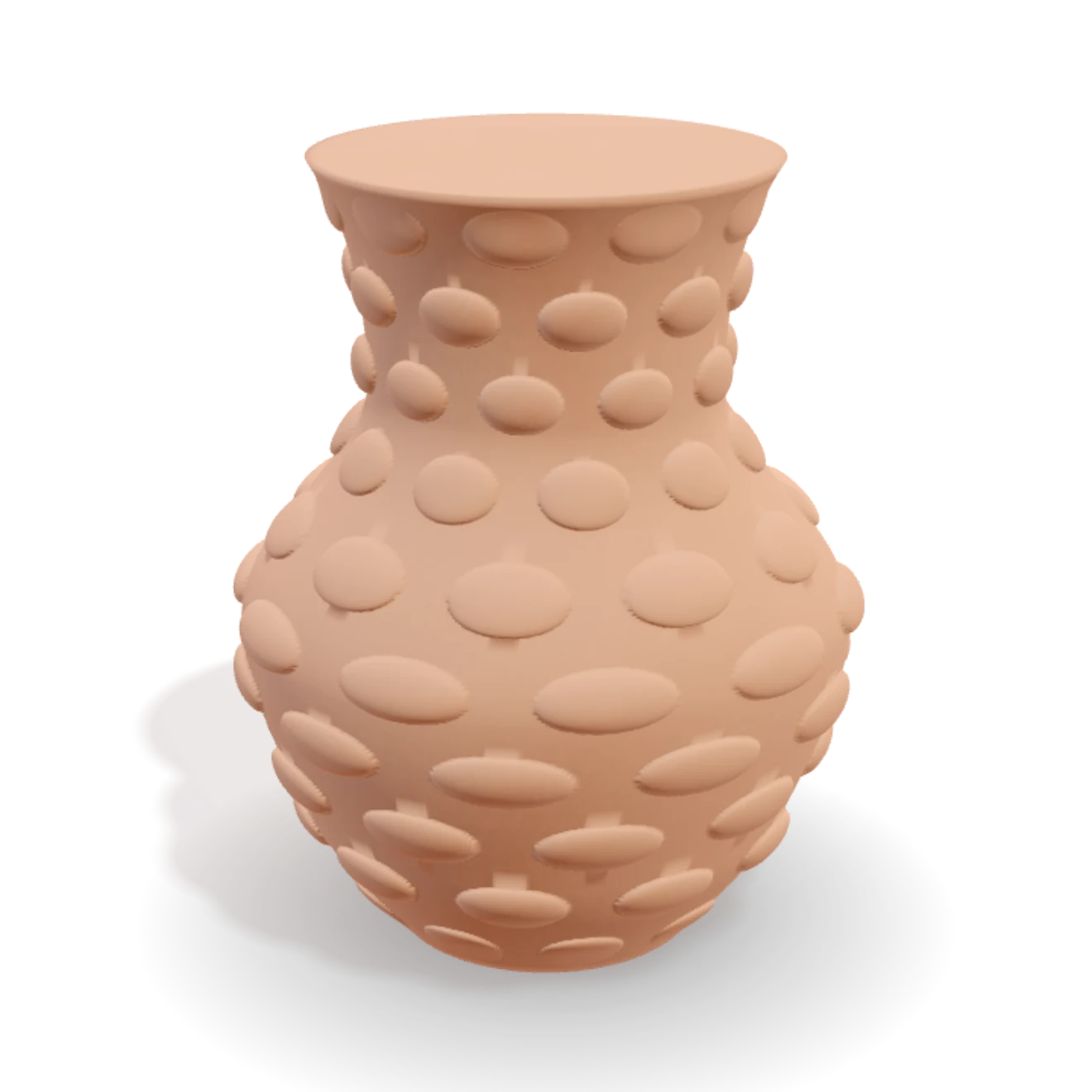
Now you can
Throw it by feel
Pull the wall on a virtual wheel and work the profile the same way you would at the splash pan. Foot, belly, neck and rim move under your hand, not under a row of number boxes.
Carve and texture
Layer twists, flutes, ribs, facets and relief from a large library of patterns. Stack them in order the way you would carve a leather-hard pot, and roll the die when you want a surprise.
Try a glaze before the kiln
Pour a living glaze that flows, breaks over the edges and pools in the lows the way a real one does. See how it sits on the form before you ever mix a test tile.
Trust the form is sound
A watertight readout stays on while you work. The wall closes cleanly from foot to rim, so the model never carries the holes and flipped faces that break a print.
Print it on your own bed
Export a clean STL, OBJ or GLB and slice it for FDM. Run it vase-mode for a single-wall pot, or solid when you want the master form for the next step.
Iterate a whole family
Change one handle and you have the next size. Spin a set of cups, a bottle and a bowl that share a foot and a profile, instead of starting each one over from a blank wheel.
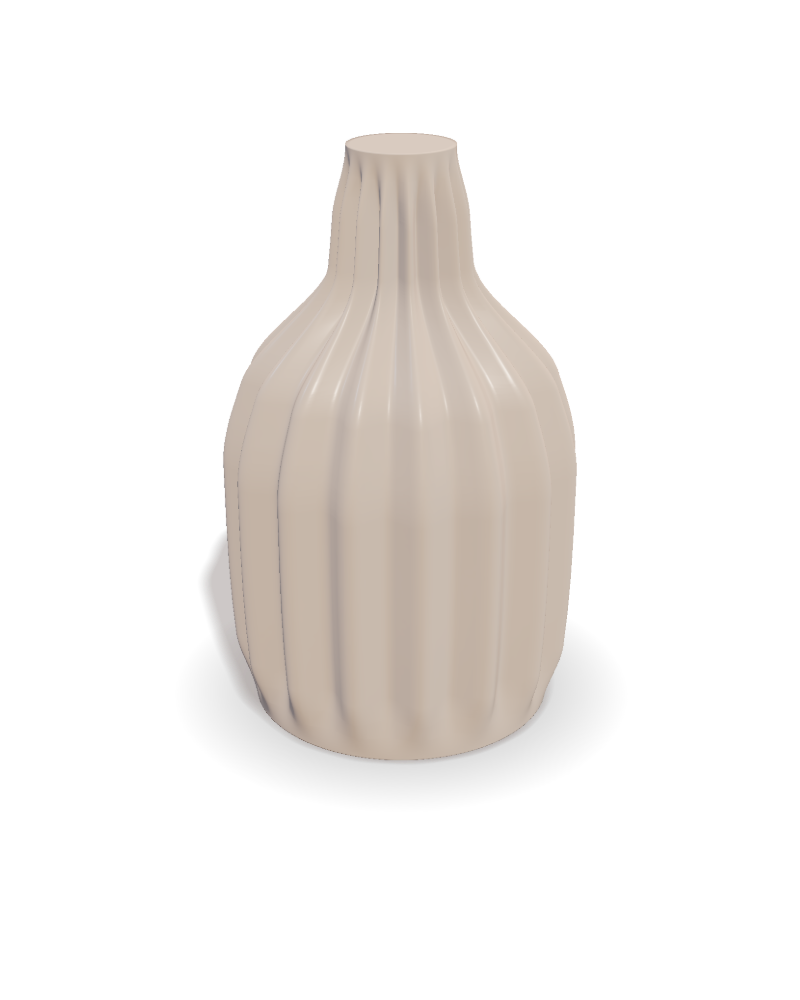
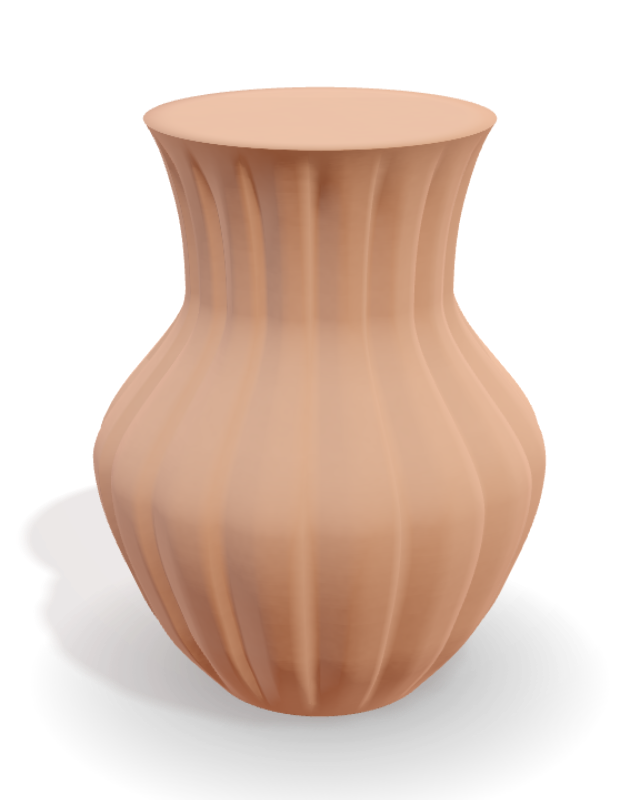
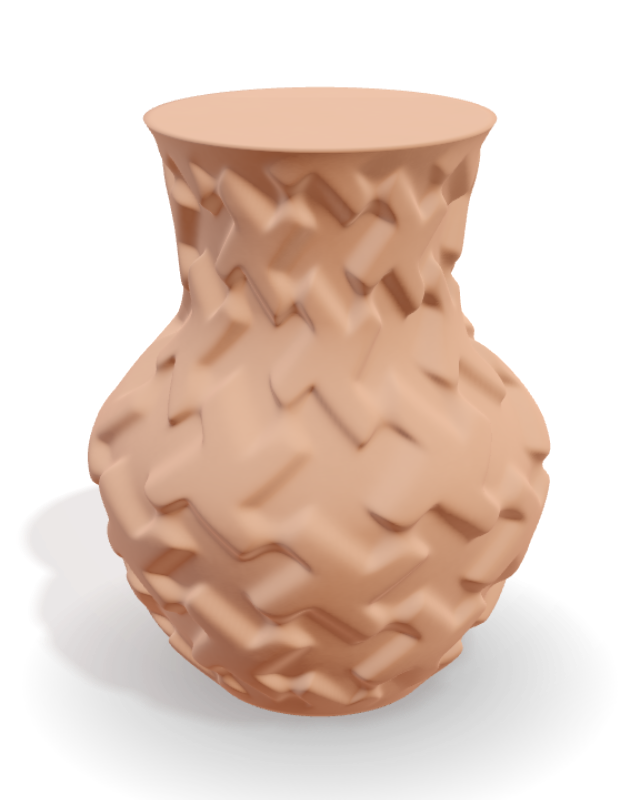
Throwing marks you would recognise, at fired-clay scale
From master form to mold
VASE 3D gives you the master vessel. The next piece, a separate engine called Moldy, takes that master and works out the molds for slip-casting and production. VASE 3D already writes a small sidecar file alongside the model so Moldy can read the opening and the pull direction when it arrives. For now you get a print-ready form. Slip-casting and molds come later.